
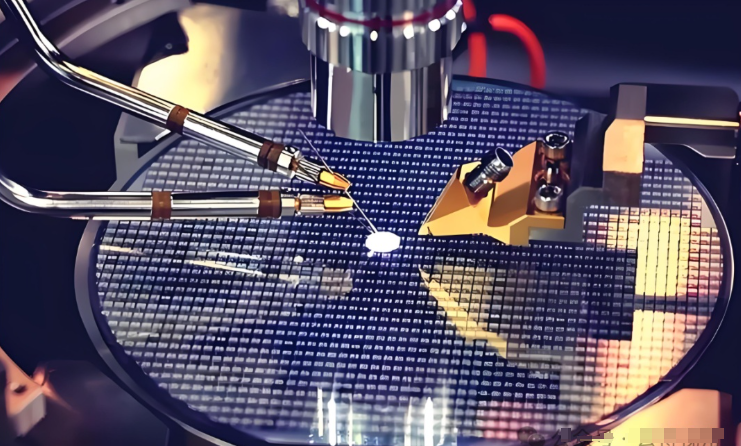
On the fab floor, a photoresist soft bake at 95°C can drift by even 1.5°C, and the line-width control at the next lithography step starts to slip. For superconductor chip fabrication, that drift isn’t just yield loss—it’s a run failure.
What Matters Technically
We built the superconductor chip fabrication lamp around controlled radiant heating and tight thermal uniformity. It holds ±0.1°C stability across the wafer plane, so the photoresist sees the same temperature every time, whether it’s soft bake or hard bake. The emitter design is low thermal mass, so it responds fast and keeps overshoot off the profile when recipes change. It runs in Class 1–100 cleanroom environments, with a sealed chamber path and low-outgassing materials, so particle count doesn’t creep up during long bake cycles. Closed-loop control keeps output repeatable, which helps hold critical dimension consistency right into the etch step.
Why It Works Here
Superconductor lines run on a tight thermal budget and a narrow process window. With this lamp, the soft bake and hard bake profiles land within tolerance, so photoresist flow and adhesion stay repeatable across the wafer. That translates to better overlay and line-width uniformity, fewer rework lots, and cycle time you can count on. And because the lamp hits setpoint quickly and holds it without oscillation, you don’t waste energy or bake heat into the equipment.
Things to Know
The lamp drops into existing lithography tracks and bake modules, but you’ll need a dedicated power feed and exhaust routing verified to meet cleanroom particulate specs. Plan a short commissioning run to set the lamp-to-wafer distance and calibrate temperature mapping for your specific carrier and recipe.