
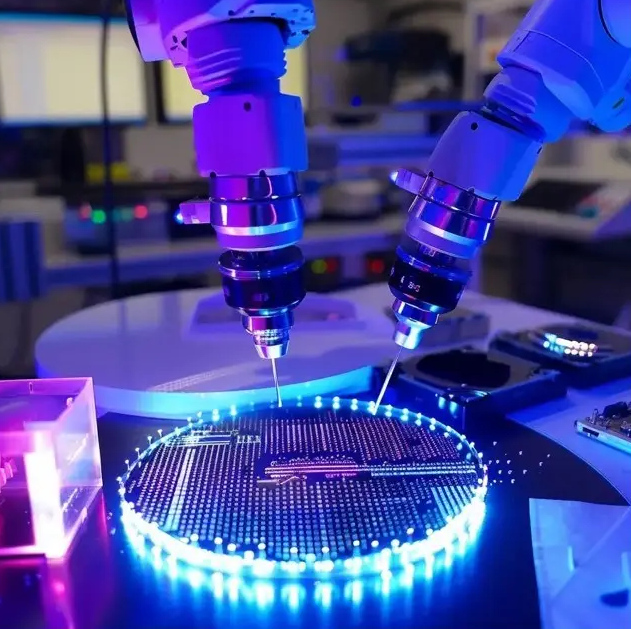
On the fab floor, a photoresist bake isn’t just another temperature step. It’s a direct lever on yield. If the IR heater drifts during soft bake or hard bake, critical dimensions slip, wafers get scrapped, and the line stops. We built a voltage regulator for fab IR to take that variability out of the equation. It holds setpoint cleanly, even when line voltage jumps around, so your thermal budget stays in spec. What matters technically This regulator is built around infrared lamp loads in cleanroom conditions. It delivers stable, low-noise power with tight closed-loop control. The payoff is wafer-level thermal uniformity of ±0.1°C across the bake surface, which keeps CD control and photoresist profile repeatability on track. It doesn’t shed extra particles, and the materials and seals hold up in Class 1–100 cleanrooms. Running 7×24, the design aims for zero unplanned failures, with service life expected in the tens of thousands of hours. Here’s why it works in lithography. When the track calls for heat, you need it consistently, cycle after cycle. This regulator keeps IR output stable from the first wafer to the last, which cuts scrap and rework. Tighter process windows follow naturally as temperature repeatability improves. Energy use drops because the system avoids overshoot and the compensatory cycling that wastes power. Maintenance intervals stretch out, and spare inventory shrinks, since the unit leans on long-life components and predictable wear. A few practical notes. Matching matters. You need to pair the regulator with the correct IR emitter type and load curve to hit the uniformity and stability numbers. Installation calls for careful thermal management and cleanroom-rated wiring to prevent hot spots and contamination. Plan a short commissioning window to tune the PID parameters for your specific track bake stations.