
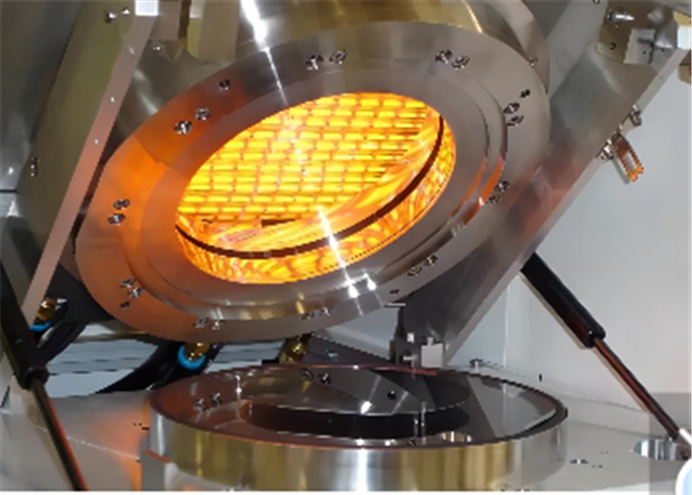
Why we test every single UHP lamp (and why you should care)
When you’re dealing with Ultra High Purity (UHP) heater lamps, you’re playing with some pretty extreme heat and very tight tolerances. In this world, a tiny insulation failure isn’t just a nuisance. It doesn’t just pop a fuse and call it a day. It can ruin a vacuum chamber or cause a massive arc in your high-voltage gear. That’s a nightmare nobody wants. That’s why we don’t do “random sampling.” We put every single tube through a full voltage withstand and insulation resistance test before it even touches a shipping box.
The “stress test” logic
Here is how it works: we hit the lamp’s electrical path with a high-voltage load. We’re looking for the stuff you can’t see—microscopic cracks in the quartz or a tiny impurity in the electrode seal. If the insulation is weak, the current leaks. Simple as that. That leakage is what leads to lamps burning out way too early or, worse, grounding your chassis. By checking every unit, we make sure you aren’t tripping your circuit breakers the second you wire things up.
The balancing act
High-wattage lamps are great because they give you the heat density you need to move fast. But that power puts a ton of pressure on the insulators. The higher the voltage, the more you have to worry about corona discharge if the lamp isn’t a perfect fit for its spot. You get that massive thermal punch, but your shielding has to be on point so you don’t mess with your sensitive sensors.
Why “good enough” isn’t enough
In UHP applications, skipping a few units in a batch is a huge gamble. Imagine a lamp that passes a sample test but fails once it’s actually in your machine. The resulting downtime can cost thousands of dollars per hour. That’s a lot of money to lose because of a “statistically likely” pass rate. Our 100% testing means every lamp is a true drop-in replacement. It hits your electrical specs exactly. You get a part that behaves exactly how you expect it to, even when your power spikes. It just works.