Why We Switched to IR Heating for Biosensors
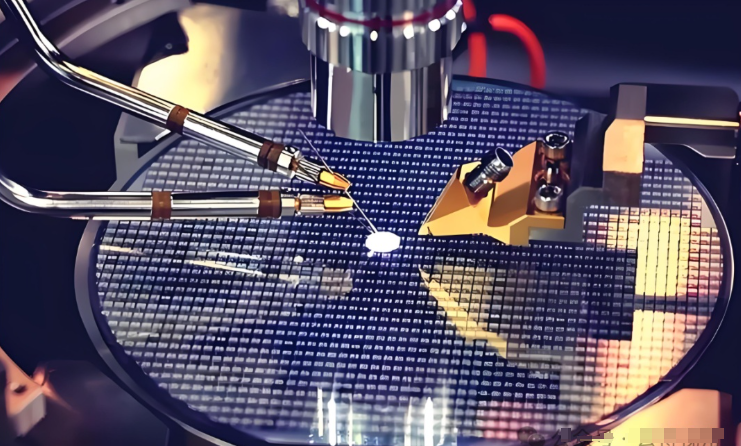
When you’re building biosensors, heat is a tricky beast. You need it to cure your polymers and get those chemical layers active, but if you overdo it, you’ll fry your substrate. It’s a delicate balance. For a long time, everyone just used big convection ovens. But honestly? Heating up a whole chamber of air just to warm up a tiny wafer is a waste. That’s why we moved to short-wave infrared (IR) lamps. Instead of heating the room, we aim the heat exactly where it needs to go. Speed and Precision Here is the real win: speed. We use lamps that hit that sweet spot between 0.76 and 1.5 $\mu$m. Because of that, the heat sinks into the material almost instantly. We went from waiting minutes for things to warm up to waiting seconds. It also makes the temperature way more consistent across the wafer. Since the response time is so fast, your PID controllers can keep things stable within $\pm 1^\circ\text{C}$. If you’ve ever dealt with inconsistent sensor sensitivity, you know that tiny margin is everything. Cleaning Up the Factory Then there’s the “green” side of things. Most ovens are energy hogs because they have to stay hot for hours—even when they’re just sitting there. IR systems are “instant-on.” You flip a switch, it’s hot, you’re done. No pre-heating, no wasted kilowatt-hours. Plus, your HVAC team will love you. Since you aren’t leaking massive amounts of waste heat into the cleanroom, the cooling system doesn’t have to work nearly as hard. The Trade-offs (Because nothing is perfect) Now, it’s not all sunshine. High-intensity IR lamps get incredibly hot at the ends. If you skimp on the cooling manifolds, your filaments will burn out or your holders will start to warp. We usually go with quartz envelopes and special coatings to bounce the heat back toward the target. Just a heads-up, though: be careful with your cleaning chemicals. If they’re too aggressive, they’ll eat right through those coatings. But the payoff is worth it. Beyond the energy savings, you’re saving space. You can ditch a massive, clunky oven for a compact IR module that fits right into your line. That’s a lot more room for other tools on your floor.